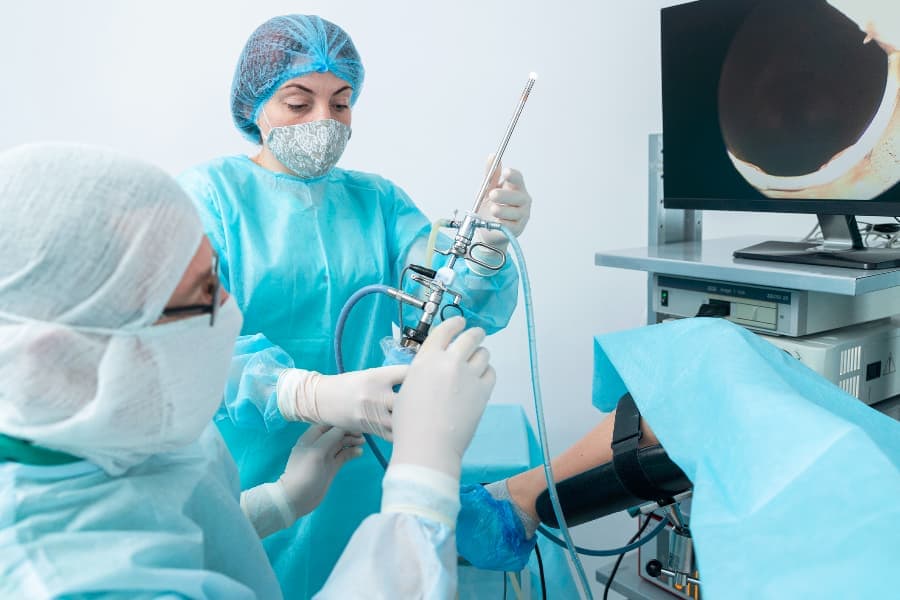
If your gynecologist has recommended a hysteroscopy, you may be wondering what it is and why you need it. This minimally invasive procedure is commonly used to diagnose and treat gynecological problems, including abnormal bleeding and fertility issues. At Richmond University Medical Center, we offer comprehensive obstetrics and gynecology services, including hysteroscopies, near you on Staten Island, New York. Here, we discuss what a hysteroscopy is, why it’s done, and what it can diagnose and treat to help you feel prepared.
Key Takeaways
- A hysteroscopy is a minimally invasive procedure that uses a thin tube with a lighted camera to examine the inside of the uterus.
- A hysteroscopy can be either diagnostic, which is used to diagnose gynecological issues, or operative, which is used to treat them.
- A hysteroscopy can be used to identify and treat polyps, uterine fibroids, adhesions, and other uterine abnormalities.
- Richmond University Medical Center provides high-quality gynecological care near you in Staten Island, New York.
What Is Hysteroscopy?
A hysteroscopy is a minimally invasive procedure that helps physicians examine the inside of the uterus and cervix to diagnose or treat gynecological issues. It consists of inserting a thin, lighted camera, called a hysteroscope, through the vagina and cervix and into the uterus, and transmitting the image onto a screen.
It can either be used for diagnostic or treatment (operative) purposes. For diagnostic purposes, the physician will use the images to explore the causes of gynecological problems. For treatment purposes, the physician will use imaging guidance, along with other tools, to treat issues like polyps and uterine fibroids. Other conditions that hysteroscopy can diagnose and treat include scar tissue, uterine septum, retained tissue, and other abnormalities.
Why Is Hysteroscopy Done?
A hysteroscopy can be done either to diagnose gynecological conditions or to treat them. Some of the most common diagnostic reasons why hysteroscopies are performed include:
Abnormal Bleeding
If a patient has abnormal uterine bleeding, including heavy or long menstrual periods, frequent spotting, or bleeding after menopause, a hysteroscopy is used to determine what is causing it. It allows the physician to directly visualize the inside of the uterine cavity, enabling them to detect structural issues or abnormal tissue. Findings may include:
- Polyps
- Fibroids
- Adhesions
- Scar tissue
- Uterine lining abnormalities
- Cancer
This visualization helps the physician see what abnormalities can be causing the bleeding without requiring any incisions.
Fertility Evaluation
Patients with fertility issues, such as trouble conceiving or recurrent miscarriages, may get a hysteroscopy to help the physician understand what may be causing them. The hysteroscopy can help identify problems like uterine scar tissue, fibroids, polyps, and a split uterine cavity.
Once the issue is identified that may be causing infertility, the physician can determine the best treatment option. If polyps, fibroids, or scar tissue are discovered, the physician may remove them at the same time using the hysteroscope and other surgical instruments.
Tissue Sampling (Biopsy)
Another common reason for a hysteroscopy is for tissue sampling, or a biopsy. The physician will take a small piece of tissue to test it for cancerous or precancerous cells, especially if the patient has had abnormal Pap tests.
What Conditions Can a Hysteroscopy Help Treat?
A hysteroscopy can help treat various gynecological conditions by addressing the cause. These conditions include:
- Uterine septum: This is a congenital malformation where the uterine cavity is split, leading to fertility complications, miscarriages, and preterm births. A hysteroscopy can help correct the malformation, restoring a normal uterus shape and improving pregnancy outcomes.
- Uterine scar tissue: Adhesions, or bands of scar tissue, form in the uterine lining after an infection or surgery. This can lead to infertility, recurrent miscarriages, and absent or reduced menstrual periods. By removing the built-up scar tissue, patients can get relief from their symptoms.
- Uterine fibroids: These are common, typically noncancerous tumors that grow in or on the muscular wall of the uterus. They may lead to symptoms like heavy menstrual bleeding, pelvic pain, and trouble conceiving. A hysteroscopy can often remove uterine fibroids, especially when they are submucosal fibroids that grow into the uterine cavity.
- Uterine polyps: Uterine polyps are soft growths on the inner lining of the uterus, which can prevent pregnancy or make it harder to conceive. A hysteroscopy can remove the polyps, relieving the patient’s symptoms.
A hysteroscopy can also be used to remove misplaced intrauterine devices (IUDs) or to perform endometrial ablation, which destroys the uterine lining to permanently treat heavy menstrual bleeding.
What to Expect Before, During, and After the Procedure
If you have to get a hysteroscopy, you may be unsure of what to expect. As a minimally invasive procedure, a hysteroscopy is typically performed in an outpatient setting and takes less than an hour for your whole visit. At Richmond University Medical Center, patients can expect:
Before the Procedure
Before the hysteroscopy, the gynecologist will provide an in-depth consultation to discuss your medical history, review any medications you’re taking, and confirm you’re not pregnant. They will also give guidance on any specific instructions you should follow, such as stopping certain medications, like blood thinners, and arranging for someone to drive you home. These instructions may vary depending on whether the hysteroscopy is diagnostic or operative.
During the Procedure
When you come for the procedure, it will typically be done in an outpatient office setting. However, if the hysteroscopy is to be used for polyp or fibroid removal, it may be done in an operating room since general anesthesia may be needed. Otherwise, a local anesthetic or sedative\ will be given to manage discomfort.
You will lie down on an exam table with your legs in the stirrups, similar to how you are positioned during a pelvic exam. Then, you can expect the physician to:
- Insert a speculum to open the vagina
- Clean the cervix with an antiseptic solution
- Use dilators to widen the cervix, if needed
- Insert the hysteroscope through the cervix and into the uterus
- Inject carbon dioxide gas or saline through the scope to expand the uterus, enabling clearer visualization
- Inspect the uterus
- If necessary, remove polyps or fibroids, or take a biopsy
Once the visualization or treatment is complete, the instruments are removed.
After the Procedure
A hysteroscopy is a minimally invasive procedure, and you can return home the same day. However, you may experience side effects afterward, including mild to moderate cramping, spotting, or light vaginal discharge. These will typically subside within a few days, and you can return to normal activity like work and exercise the next day. However, your physician will provide guidance on things to avoid for a few weeks, such as sexual activity, tampon use, and douching.
You will have a follow-up appointment within a couple of weeks to review the procedure findings, discuss biopsy results, and determine the next treatment steps. While you are recovering, contact your physician if you experience heavy bleeding, severe abdominal pain, or a fever, as these may indicate complications.
Learn More About Hysteroscopies at Richmond University Medical Center
If you need a hysteroscopy, trust the gynecological team at Richmond University Medical Center. Whether you need a diagnostic or operative hysteroscopy, our board-certified physicians offer experienced gynecologic care and surgical support for patients. We also offer trusted maternity care and gynecologic surgery. To learn more about hysteroscopy or to schedule an appointment near you in Staten Island, NY, contact us today.
Hysteroscopy FAQs
Why would a physician recommend a hysteroscopy?
A physician may recommend a hysteroscopy to get a better look at the inside of the uterus and determine what is causing symptoms, such as abnormal bleeding, infertility, or recurring miscarriages.
Can a hysteroscopy treat problems at the same time?
Yes, a hysteroscopy can diagnose and treat problems at the same time. If a patient presents with abnormal bleeding and undergoes a hysteroscopy, the physician may detect the abnormality, such as fibroids, and remove it at the same time.
Is hysteroscopy painful?
It depends on many factors, including the patient’s pain tolerance and whether any anesthesia is used. Most patients experience only mild to moderate discomfort, not true pain.
What is recovery like after a hysteroscopy?
After a hysteroscopy, the recovery is fairly fast. Most patients can return to normal activities within one to two days. Some side effects, such as cramping or light spotting, may occur, but often subside within a few days. However, patients should avoid sexual intercourse, douching, and using tampons for one to two weeks to prevent infections.
What are the risks of hysteroscopy?
Hysteroscopy is a safe procedure that has complications in less than 1% of cases. However, there are some risks to be aware of. The most common risks include light bleeding, cramping, and infection, while rare, serious risks include uterine perforation, fluid overload, or damage to surrounding organs.