Hernia Repair Near You in Staten Island, NY
A hernia that causes pain, limits your activity, or continues to grow is not something to avoid treating. Left alone, hernias can worsen over time, and in some cases, they become surgical emergencies. At Richmond University Medical Center, we offer expert hernia evaluation and repair near you in Staten Island, New York.
Our surgeons are experienced in the full range of hernia repair procedures. Every patient receives an individualized evaluation and a treatment plan tailored to their specific hernia, health history, and recovery goals. Learn how we can support your recovery close to home.
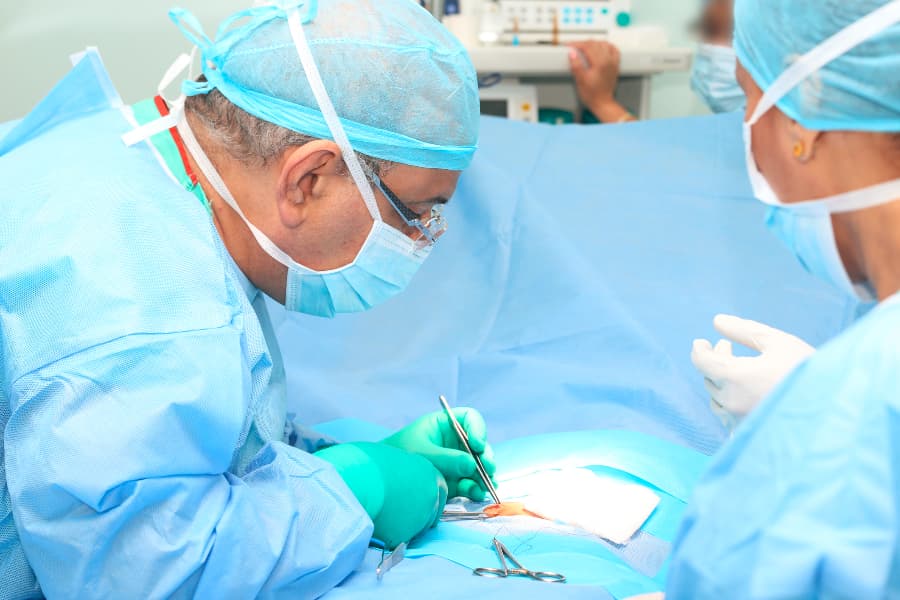
Key Takeaways
- A hernia occurs when an organ or tissue pushes through a weak spot in the surrounding muscle or connective tissue wall.
- Common types of hernias include inguinal, umbilical, incisional, hiatal, and femoral hernias.
- Not all hernias require immediate surgery, but enlarging, symptomatic, or recurrent hernias typically do.
- Surgical repair options include open, laparoscopic, and robotic-assisted procedures, with or without mesh reinforcement.
- Richmond University Medical Center provides personalized, coordinated hernia care, from initial diagnosis through surgery, recovery, and follow-up.
What Is a Hernia?
A hernia occurs when an organ or fatty tissue pushes through a weak spot or opening in the muscle or connective tissues that normally hold it in place. Hernias most commonly develop in the abdomen or groin, though they can occur in other areas of the body as well. They range from small and asymptomatic to large and painful, and they do not resolve on their own.
Several factors can cause you to develop a hernia, including age-related weakening of muscle and connective tissue, chronic straining from constipation or heavy lifting, persistent coughing, obesity, and prior abdominal surgery. Some hernias have a genetic component, while others develop as a direct result of physical stress on the abdominal wall.
Common types of hernias include:
- Inguinal hernia: This is the most common type. It occurs when tissue pushes through the inguinal canal in the groin and is more prevalent in men than women.
- Umbilical hernia: This develops near the belly button when part of the intestine or fatty tissue protrudes through the abdominal wall. It is common in infants but also occurs in adults.
- Incisional hernia: This forms at the site of a previous abdominal surgical incision, where the tissue has been weakened, or the repair has given way over time.
- Hiatal hernia: This occurs when part of the stomach pushes upward through the diaphragm into the chest cavity. It is often associated with acid reflux and heartburn.
- Femoral hernia: This is like an inguinal hernia but is located lower in the groin near the femoral canal. It is more common in women and carries a higher risk of complications.
- Epigastric hernia: This is a small protrusion through the abdominal wall between the belly button and the chest and often involves fatty tissue.
Understanding the type, size, and location of a hernia is the starting point for determining the right treatment approach. At Richmond University Medical Center, your surgeon will perform a thorough physical examination to assess your specific hernia and guide you through your options.
What Are the Signs You May Need a Hernia Repair?
Some hernias are discovered incidentally. Your physician may notice one on an imaging study done for another reason. Others make themselves known through a range of symptoms. The nature and severity of these symptoms help your physician determine how urgently you need treatment.
You should schedule an appointment if you notice:
- A visible bulge or lump in the abdomen, groin, or near a prior surgical incision that may appear when standing, coughing, or straining, and flattens when lying down
- Aching, pressure, or a dragging sensation in the affected area, especially after prolonged standing, physical exertion, or at the end of the day
- Discomfort or pain that worsens with bending, lifting, or coughing
- A sense of heaviness or fullness in the groin or abdomen
- Heartburn, chest discomfort, or difficulty swallowing
If you notice a hernia that is growing, causing increasingly frequent or severe symptoms, or that has returned after a previous repair, you should be evaluated promptly. An enlarging hernia is more likely to cause complications over time. Likewise, a recurrent hernia, or one that develops at or near the site of a prior repair, requires surgical intervention.
Signs of Incarceration or Strangulation: Seek Emergency Care
In some cases, the tissue trapped within the hernia becomes stuck and cannot be pushed back into place. This is known as incarceration. If the blood supply to that tissue is then cut off, the hernia is considered strangulated. This is a surgical emergency. Seek emergency medical attention if you experience:
- Severe pain that comes on quickly and does not improve
- A hernia bulge that becomes firm, tender, or cannot be pushed back in
- Nausea, vomiting, or inability to pass gas or have a bowel movement
- Redness, warmth, or discoloration of the skin over the hernia
- Fever accompanying abdominal pain
A strangulated hernia requires immediate surgical repair. Do not wait to seek care if you develop these symptoms.
What Are My Treatment Options for Hernias?
Deciding the best course of treatment depends on the type and size of the hernia, symptom severity, your overall health, and the risk of complications. At Richmond University Medical Center, your surgeon will review all these factors and help you understand which approach is best for you.
Conservative and Non-Surgical Management Options
Not every hernia requires immediate surgery. In small, asymptomatic hernias, you may be able to monitor them carefully over time. This involves regular follow-up visits to track any changes in size or symptoms.
We may also use nonsurgical management strategies to reduce discomfort and slow hernia progression, including:
- Activity modification: You should avoid heavy lifting or straining activities that place increased pressure on the abdominal wall.
- Weight management: Reducing excess body weight decreases intra-abdominal pressure and can relieve hernia-related symptoms.
- Dietary changes: For patients with hiatal hernias, adjusting eating habits and avoiding trigger foods can help manage reflux symptoms.
- Supportive garments: In some cases, a hernia truss or support belt may provide temporary relief of symptoms, though it does not treat the underlying defect.
- Symptom management: Prescription or over-the-counter medications can help manage acid reflux or pain.
Watchful waiting is not appropriate for all hernias. For example, femoral hernias carry a high risk of incarceration and are typically repaired immediately after they are diagnosed, regardless of your symptoms. Your surgeon will be direct with you about whether conservative management is a safe option in your case.
Surgical Options
Surgery is the only definitive treatment for a hernia. At Richmond University Medical Center, our surgical team offers all major approaches to hernia repair, including:
Open Hernia Repair
Open hernia repair involves a single incision made directly above the hernia site. The surgeon repositions the protruding tissue and closes the defect in the abdominal wall, typically reinforcing the repair with a piece of surgical mesh. This remains the preferred approach in certain clinical situations, including emergency repairs and some complex or recurrent cases.
Laparoscopic Hernia Repair
Laparoscopic repair uses several small incisions and a thin camera to perform the surgery with specialized instruments. This minimally invasive surgery offers a few advantages over open surgery, including:
- Less post-operative pain
- Reduced risk of wound complications
- Shorter hospital stays
- Faster return to normal activity
It is ideal for bilateral inguinal hernias. It allows your surgeon to repair both sides through the same small incisions in a single procedure.
Robotic-Assisted Hernia Repair
Robotic-assisted repair builds on the laparoscopic approach with improved three-dimensional visualization, a greater range of instrument motion, and extra precision. These advantages are valuable in complex, large, or recurrent hernias. Robotic techniques allow surgeons to perform intricate repairs with greater control, and our patients benefit from the same recovery benefits as laparoscopic surgery.
Mesh Use in Hernia Repair
Surgical mesh is a synthetic material used to reinforce the repair and reduce the risk of hernia recurrence. It is used in most hernia repairs today and significantly improves long-term outcomes. Your surgeon will discuss whether it is appropriate for your specific repair and answer any questions you have about the materials we use.
What Should You Expect Before, During, and After Hernia Repair Surgery?
Your first appointment at Richmond University Medical Center will include a review of your medical and surgical history, a physical examination of the hernia, and a discussion of your symptoms and how they affect your daily life. We may also order radiology imaging, such as an ultrasound, computed tomography (CT) scan, or magnetic resonance imaging (MRI), to get a closer look at the hernia. Based on these findings, your surgeon will recommend a treatment approach.
Pre-operative preparation includes routine blood work, imaging if not already completed, a review of current medications, and anesthesia clearance. Your surgical team will provide specific instructions based on your procedure.
Recovery: Activity, Restrictions, and Returning to Normal
Most patients undergoing minimally invasive hernia repairs go home the same day and begin recovering quickly. If you have an open repair, you may have a brief hospital stay. Your care team will provide personalized guidance, but general expectations include:
- Walking: We encourage you to start taking short, frequent walks on the first day after surgery. This promotes circulation and reduces the risk of blood clots.
- Lifting restrictions: Most patients should avoid lifting anything heavier than 10 to 15 pounds for the first two to four weeks. Your surgeon will provide specific limits based on your repair.
- Incision care: Keep the surgical site clean and dry, follow dressing instructions, and monitor for signs of infection.
- Returning to desk work: Many patients return to sedentary work within one to two weeks after a minimally invasive repair.
- Returning to physical work or exercise: You can typically resume your normal activities within four to six weeks.
- Follow-up appointments: These are scheduled the day of surgery to assess healing, review any pathology if we sent tissue to a lab, and clear you for a gradual return to full activity.
Contact your care team if you develop fever, worsening pain, significant swelling, or any other unusual or concerning symptoms.
Find Expert Hernia Repair Near You on Staten Island
A hernia that causes pain, limits what you can do, or continues to grow should be addressed. The sooner it is evaluated, the more options you have available. Richmond University Medical Center offers comprehensive hernia care for patients across Staten Island, with board-certified surgeons experienced in open, laparoscopic, and robotic-assisted repair.
Whether your hernia is newly diagnosed or has been monitored for some time, our surgical team will give you an honest assessment and the full picture of what your repair involves, so you can make a confident, informed decision about your care. Contact us today to schedule a consultation for your hernia repair near you in Staten Island, NY.
Frequently Asked Questions About Hernia Repair
Do all hernias require surgery?
Not always. Some small, minimally symptomatic hernias may be monitored. However, hernias do not heal on their own and may eventually require repair.
What happens if a hernia is left untreated?
Untreated hernias may enlarge over time and can lead to complications, such as incarceration or strangulation, which may require emergency surgery.
How long does recovery from hernia repair take?
Recovery varies. Many patients can return to light activity within several days. However, full recovery may take several weeks.
What is robotic hernia repair?
Robotic hernia repair is a minimally invasive surgical approach that uses robotic-assisted technology to help surgeons perform precise repairs through small incisions.
Can a hernia come back?
Yes. Although rare, hernias can occasionally recur. Recurrence is more common after large complex repairs.