Hysteroscopy Near You in Staten Island, NY
Abnormal bleeding, pelvic pain, fertility concerns, and other uterine conditions can affect a woman’s health and quality of life. When symptoms persist or imaging studies reveal abnormalities inside the uterus, hysteroscopy may help physicians diagnose the cause and treat the problem during the same procedure.
At Richmond University Medical Center, our board-certified gynecologists provide comprehensive women’s health care near you in Staten Island, New York. Learn how we use advanced diagnostics and minimally invasive gynecologic surgeries, including hysteroscopy, to evaluate and treat a wide range of uterine conditions.
Key Takeaways
- Hysteroscopy uses a thin, lighted scope inserted through the cervix to examine the inside of the uterus.
- Diagnostic hysteroscopy identifies the cause of abnormal bleeding, pelvic pain, or abnormal imaging findings, while operative hysteroscopy treats the problem.
- Common indications include uterine polyps, fibroids, adhesions, retained tissue, and unexplained infertility or recurring pregnancy loss.
- Richmond University Medical Center offers expert hysteroscopy and gynecologic surgical care for patients across Staten Island, NY.
What Is Hysteroscopy?
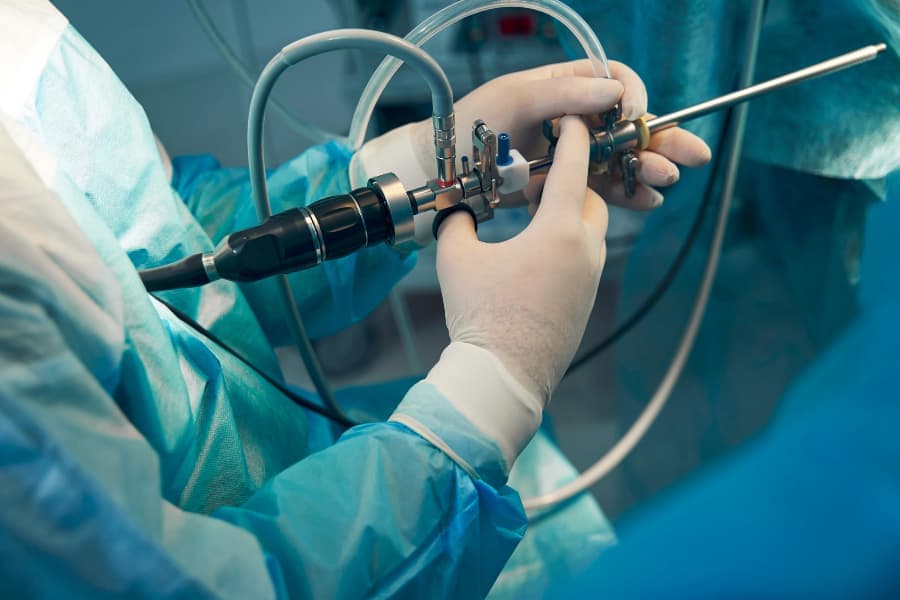
Hysteroscopy is a minimally invasive procedure that uses a hysteroscope (a thin, lighted instrument with a camera) inserted through the vagina and cervix into the uterine cavity, without any incisions. The camera transmits a real-time image of the uterine lining to a monitor, giving the surgeon a detailed view of the uterine cavity. At Richmond University Medical Center, we do hysteroscopies as a diagnostic procedure, an operative one, or both.
Diagnostic Hysteroscopy
A diagnostic hysteroscopy examines the uterine cavity and identifies the source of a symptom or an abnormal finding on imaging. It provides direct visualization that we cannot replicate with an ultrasound or a magnetic resonance imaging (MRI) scan. It helps confirm the presence, size, and location of polyps, fibroids, adhesions, or other structural abnormalities. At Richmond University Medical Center, this outpatient procedure is done with minimal anesthesia.
Operative Hysteroscopy
An operative hysteroscopy uses specialized instruments passed through the hysteroscope to treat the condition identified during the examination. We can remove polyps, resect fibroids, divide adhesions, and clear retained tissue without making a single external incision. When we confirm a structural problem during a diagnostic hysteroscopy, and it can be treated the same way, we often do so during the same session.
How Do You Know If You Need Hysteroscopy?
Your physician will recommend that you get a hysteroscopy when your symptoms or our diagnostic findings suggest that you have a structural problem inside your uterus. You may be a candidate for a hysteroscopy if you are experiencing:
- Heavy, prolonged, or irregular menstrual bleeding that has not responded to medical management
- Postmenopausal bleeding that needs to be examined further
- Spotting or bleeding between periods
- Chronic or cyclical pelvic pain without a clear explanation
- Difficulty conceiving or recurrent pregnancy loss that may be related to a uterine abnormality
- An abnormal finding on ultrasound or MRI, such as a polyp, thickened endometrial lining, or intrauterine lesion
- A displaced or embedded intrauterine device (IUD) that cannot be removed with standard methods
If you are unsure whether hysteroscopy is the right next step, our gynecologists will thoroughly examine you. Then, they’ll walk you through all available options before they recommend a treatment option.
Are There Other Treatment Options Instead of Hysteroscopy?
Hysteroscopy is not always the first step. Depending on your underlying condition and its severity, your physician may recommend a period of conservative management or additional testing. Options include:
Conservative and Nonsurgical Treatment Options
For small or asymptomatic uterine findings, we may consider watchful waiting with repeat imaging before we recommend any intervention. A follow-up ultrasound or sonohysterogram can help us track changes over time.
Many causes of abnormal uterine bleeding and pelvic pain also respond to hormonal management without surgery. Options include:
- Combined oral contraceptives or progestin-only pills to regulate cycles and reduce bleeding
- Levonorgestrel IUD, which is highly effective for heavy menstrual bleeding
- GnRH agonists to temporarily reduce estrogen levels, shrink fibroids before surgery, or to provide short-term symptom relief
- Tranexamic acid or other anti-inflammatories for heavy menstrual bleeding
Hormonal treatment works best when your underlying cause is functional rather than structural. If your symptoms persist or we discover a structural abnormality, we’ll begin to consider hysteroscopy.
Before we recommend hysteroscopy, our team may do an endometrial biopsy or other tests to gather additional information. We may even do lab work to rule out coagulation disorders, thyroid dysfunction, or hormonal imbalances that could be contributing to your symptoms. Your physician will be clear about what other information the lab needs and why.
When You Need a Hysteroscopy
Sometimes conservative management is not enough. If we need to treat a condition inside your uterus directly or confirm it, we will schedule you for a hysteroscopy. Common signs include:
- Uterine polyps: These benign growths of the endometrial lining can cause abnormal bleeding and fertility problems.
- Submucosal fibroids: These fibroids grow into the uterine cavity and cause bleeding and infertility.
- Intrauterine adhesions (Asherman’s syndrome): This is when scar tissue within your uterine cavity causes absent or reduced periods, pelvic pain, and infertility.
- Retained tissue: This is tissue that remains after a miscarriage, abortion, or childbirth.
- Uterine septum: This congenital band of tissue divides the uterine cavity and can cause recurring miscarriages.
- Displaced or embedded IUD: When standard removal methods are not successful, hysteroscopy allows your physician to safely remove your IUD.
- Endometrial ablation: This procedure destroys the uterine lining to reduce or eliminate heavy menstrual bleeding in patients who do not want to preserve their fertility.
Your surgeon at Richmond University Medical Center will confirm your condition. Then, they will explain the procedure in detail and ensure you understand what to expect from the hysteroscopy. They will also describe what your recovery will look like, so you can decide on the best treatment.
What Should You Expect Before, During, and After Hysteroscopy?
At Richmond University Medical Center, every patient receives individualized care from the first consultation through recovery. The process typically looks like this:
Consultation
Before your hysteroscopy, your gynecologist will review your medical history, current medications, and any prior imaging or diagnostic results. This pre-procedure preparation typically includes:
- Pregnancy test: We must confirm you are not pregnant.
- Timing: We usually schedule a hysteroscopy in the first half of your menstrual cycle, after you have stopped bleeding. This is when the uterine lining is thinnest, which makes seeing everything easier.
- Medication review: You may have to stop blood thinners and certain supplements.
- Cervical preparation: In some cases, we may prescribe cervical softening medication.
- Anesthesia planning: Depending on the complexity of your procedure, we will perform the surgery in an outpatient clinic with local anesthesia or sedation or in an operating room under general anesthesia.
Your care team will provide you with specific instructions based on your planned procedure and health history. You should also arrange for someone to drive you home.
During the Procedure
You will be in the same position you are in during a pelvic exam. We will gently dilate your cervix if needed and pass the hysteroscope through your vagina and cervix into the uterine cavity. To improve visibility, we use a saline mixture or gas to expand the cavity. The camera transmits a real-time image to a monitor, allowing your surgeon to examine your uterine walls, lining, and tubal openings.
If the procedure is operative, we use specialized instruments to treat your condition. The procedure typically takes 15 to 60 minutes, depending on what we are treating.
Recovery, Discharge, and Follow-Up
Compared to most gynecologic procedures, you recover quickly. Most of our patients are discharged within one to two hours. Even though you can go home the same day, you should expect the following:
- Cramping: Mild to moderate cramping is common for 24 to 48 hours.
- Spotting: Light vaginal discharge or spotting is normal for several days and should resolve on its own.
- Symptom relief: You should notice less bleeding and pain within your first menstrual cycle.
- Work: Most patients can return to desk work within one to two days.
- Exercise: You can return to light activity within a few days.
- Sexual activity: You must refrain from sexual activity for one to two weeks to allow your uterine wall and cervix to heal.
- Follow–up: Your physician will schedule a follow-up visit for a few weeks after your surgery to review pathology and see how well you are healing.
Contact your care team immediately if you develop a fever above 101 degrees Fahrenheit, heavy bleeding that does not improve after the first 24 hours, severe or worsening abdominal pain, foul-smelling discharge, or difficulty urinating. While these symptoms are uncommon, they can indicate an infection, which requires emergency medical attention.
Receive Expert Hysteroscopy and Gynecologic Care on Staten Island
When a uterine condition affects your health, your cycles, or your fertility, getting an accurate diagnosis is the first step toward treatment. At Richmond University Medical Center, patients have access to board-certified gynecologic surgeons experienced in diagnosis and operative hysteroscopy. Whether it is the first step toward a diagnosis or the start of your treatment, our team has the expertise and technology to help you feel better. Contact us today to schedule an appointment near you in Staten Island, New York.
Frequently Asked Questions About Hysteroscopy
Is hysteroscopy considered surgery?
Hysteroscopy is a minimally invasive procedure used to examine or treat conditions inside the uterus. While you may have some anesthesia or sedation, you will not have any incisions or scarring.
Does hysteroscopy require anesthesia?
Some hysteroscopy procedures use local anesthesia, while others may involve sedation or general anesthesia.
How long does recovery take after a hysteroscopy?
Many patients recover within several days. However, the actual length of time depends on the type of procedure performed and whether you need additional treatment.
What conditions can hysteroscopy treat?
Hysteroscopy can be used to diagnose or treat uterine polyps, fibroids, adhesions, retained tissues, abnormal bleeding, and certain fertility-related conditions.
Will I bleed after a hysteroscopy?
Light spotting or mild bleeding is common, but it should resolve after a few days.