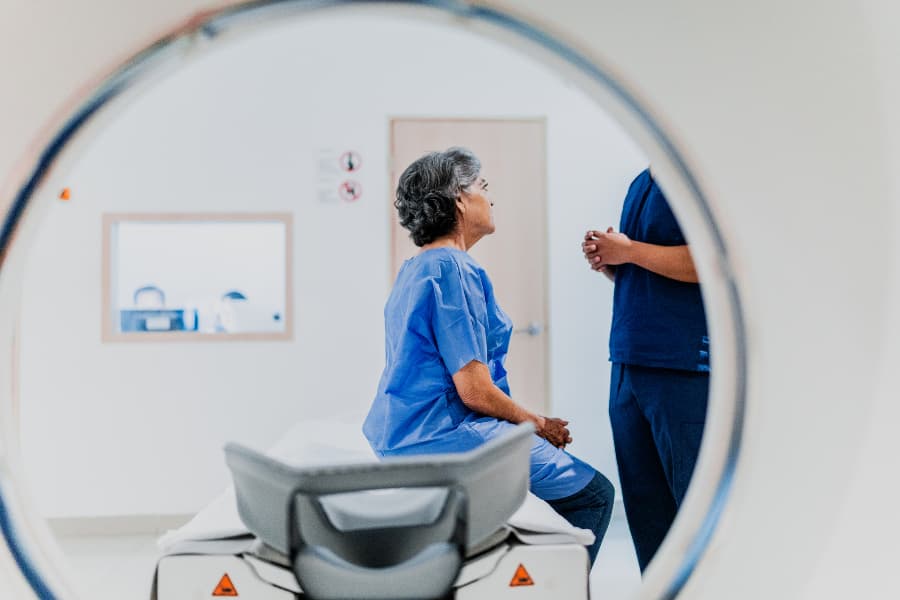
Routine breast cancer screening is a key part of cancer detection and treatment. By identifying cancer early, screenings give patients the best chance for successful treatment. However, not all screenings are the same. Different screening methods excel at finding cancer in different ways, making them ideal for a range of patients. With Richmond University Medical Center, learn more about the types of breast cancer screening and find out which is best for you.
What Are the Types of Breast Cancer Screening?
According to U.S. Food & Drug Administration (FDA), over 40 million mammograms are performed annually in America. Many of these patients would also benefit from supplemental imaging. Breast cancer screening can be performed in multiple ways. The three most common are:
- Mammogram: A mammogram is an imaging test that uses low dosages of X-rays to look for changes in the breast. It is the standard screening method for breast cancer.
- Ultrasound: An ultrasound uses sound waves. It is especially useful for screening dense breast tissue and can sometimes detect suspicious areas that a mammogram would miss.
- Magnetic Resonance Imaging (MRI): An MRI scan uses powerful magnets and an IV contrast dye. It delivers exceptionally clear images of the breast for enhanced cancer detection.
Mammograms are the gold standard for early cancer detection and often the first line of defense. Of the women who receive them, about 10% are called back for additional imaging. Most callbacks are not serious. Even so, it is important to perform the additional testing to rule out worrisome possibilities.
Mammograms and Dense Breast Tissue
In most cases, further imaging is required because the patient has dense breast tissue. Dense tissue occurs in half of all women. It is a known limitation of mammography, as dense tissue makes it harder to see through the breast and identify suspicious areas. Dense breast tissue also increases a patient’s risk of breast cancer, which makes it extremely important to image.
As of 2013, New York adopted a dense breast notification law that requires healthcare providers to tell patients whether their breasts are dense or not dense. This notification prompts patients to discuss the value of additional testing. In September 2024, FDA applied a similar law nationwide. If you have dense breasts, consider opting for a yearly MRI in addition to annual mammograms. This supplemental testing may increase the chances that cancer is detected early if it develops.
When to Get a Breast MRI
Breast MRI screenings are recommended for high-risk patients. They are lengthy and expensive when compared to a mammogram or ultrasound, and insurance carriers do not always cover the full cost if the patient has no current issues. However, patients with certain risk factors may qualify for full coverage of a breast MRI even if their yearly mammogram did not detect an abnormality. This includes patients with:
- A 20% or higher risk of developing breast cancer
- A strong family history of breast cancer
- Previous abnormal breast biopsies
In addition, breast MRIs may be used for applications other than breast cancer screening. They may also help oncologists evaluate the extent of cancer after it has been diagnosed, letting them stage the cancer accurately and determine the most appropriate breast cancer treatment.
What to Expect from Getting a Breast MRI
When getting a breast MRI, the patient is asked to change into a gown. They then lie face down on a table with openings for the breasts. The table slides into the MRI machine, which is a large, closed cylinder. The scanner rotates around the patient to take a 360-degree image. Patients need to stay very still until the scan is complete.
The first few images are typically performed without a contrast dye. The technician will then apply the contrast dye and take additional pictures. Contrast dye causes suspicious tissues to appear as bright spots on images, making them easier to identify and evaluate.
Breast MRIs are not associated with any pre-test preparations or dietary restrictions. They take under an hour to complete, after which patients are free to return to their normal activities. Abbreviated MRIs are currently in development. While not yet available at Richmond University Medical Center, these scans provide the most relevant information within 10 to 15 minutes.
Receive Breast Cancer Screening Near You in Staten Island, NY
Richmond University Medical Center currently offers comprehensive breast cancer screening and diagnostic services at our Comprehensive Breast and Imaging Center. Our all-inclusive breast imaging services include mammograms, ultrasounds, and conventional breast MRIs. By providing all types of screening, we aim to guide patients toward the test type right for them.
Choosing the appropriate breast cancer screening method begins with a risk assessment and a conversation with a healthcare provider. Patients with questions can contact Richmond University Medical Center in Staten Island, New York, to discuss their options.