Shock Wave Lithotripsy Near You in Staten Island, NY
Kidney stones are one of the most painful urologic conditions a person can experience. When a stone is too large to pass on its own, you need to seek treatment. Extracorporeal shock wave lithotripsy (ESWL) is a nonsurgical procedure that breaks kidney stones into smaller fragments, so they can pass naturally through the urinary tract.
At Richmond University Medical Center, we offer shock wave lithotripsy and comprehensive kidney stone care near you in Staten Island, New York. Our board-certified urologists evaluate you individually to determine whether this is the right approach. Learn more about our process below.
Key Takeaways
- Shock wave lithotripsy uses focused sound waves to break kidney stones into smaller pieces that can pass through the urinary tract on their own.
- It is a nonsurgical, outpatient procedure, and most patients return home the same day.
- Not all stones are good candidates for lithotripsy, and your urologist will determine the best treatment for you.
- Richmond University Medical Center provides expert kidney stone evaluation and treatment.
What Is Shock Wave Lithotripsy?
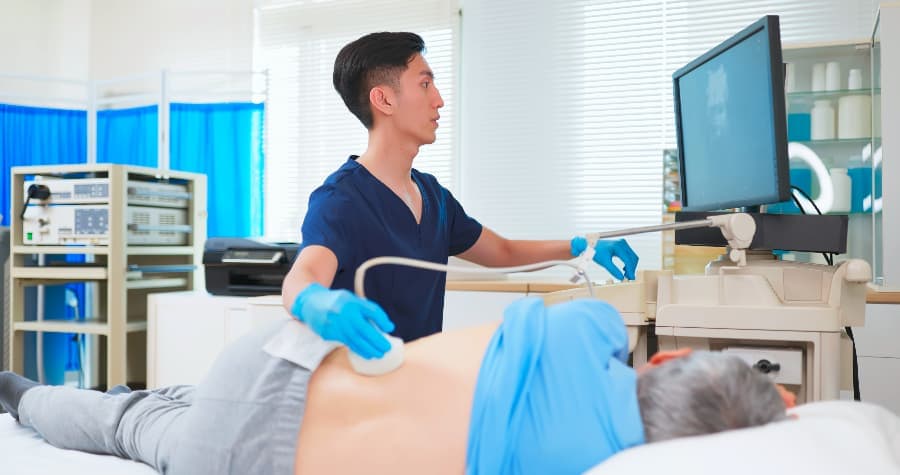
Shock wave lithotripsy is a nonsurgical procedure that uses high-energy acoustic waves generated outside the body to locate and fragment kidney stones. The waves are precisely focused on the stone using imaging guidance, often fluoroscopy or ultrasound. This concentrates the energy at the stone while minimizing impact on surrounding tissue.
Over the course of a treatment session, the repeated shock waves break the stone into smaller pieces. The goal is to get them small enough to pass through the ureter and out of the body naturally.
This 45- to 60-minute procedure is done under sedation or anesthesia, without incisions or internal instruments. Because it is nonsurgical and generally safe, it has become one of the most widely used treatments for kidney stones.
However, not all kidney stones respond well to ESWL. The best results come when:
- The stone is in the kidney or upper ureter
- The stone size is between five and 20 millimeters
- The stone is composed of calcium oxalate dihydrate, calcium phosphate, uric acid, or struvite
- There is no major obstruction downstream that would prevent fragments from passing
- The patient’s anatomy and body allow the stone to be targeted with imaging
Harder stone types are more resistant to shock waves and may be better treated with ureteroscopy or percutaneous nephrolithotomy. Your urologist will review your imaging and stone characteristics to recommend the approach that’ll help you pass the stone completely.
How Do You Know if You Need Shock Wave Lithotripsy?
Whether you need lithotripsy or any kidney stone treatment depends on the size and location of the stone, the severity of your symptoms, and whether you’re developing complications. As with all our treatments, the process begins with an accurate diagnosis:
Symptoms of Kidney Stones
Kidney stones do not always cause symptoms, especially when they are small and still within the kidney. When a stone moves into the ureter or causes obstructions, you may develop severe symptoms. You should seek medical evaluation if you experience:
- Intense, cramping pain in the flank, side, or lower back, which may come in waves and radiate toward the groin or lower abdomen
- Nausea or vomiting with the pain
- Blood in the urine or urine that appears pink, red, or brown
- Frequent or urgent need to urinate, or a burning sensation during urination
- Difficulty urinating or a reduced urine stream
- Fever or chills alongside flank pain
If you have a fever with flank pain and an obstructing kidney stone, it is a medical emergency. Go to the closest emergency room if you develop those symptoms together.
How Physicians Determine the Right Treatment
A thorough evaluation is essential before your physician can recommend lithotripsy or any other treatment for kidney stones. At Richmond University Medical Center, your urologist will use a combination of the following to assess your stone and guide treatment planning:
- Computed tomography (CT) scan: This is the most accurate radiological image for kidney stone diagnosis. It identifies stone size, number, location, and density. It can also detect any associated obstructions or anatomical factors.
- Kidney, ureter, and bladder (KUB) X-ray: This is used to monitor radiopaque stones and helps monitor if you passed the fragments after lithotripsy.
- Ultrasound: This is a radiation-free option that is used to detect stones and evaluate the kidneys. It is useful in follow-up appointments and for patients who need to limit their radiation exposure, such as those who are pregnant.
- Urinalysis and urine culture: These test for blood, infection, and crystals in the urine.
- Stone composition analysis: When a stone or stone fragments are recovered, laboratory analysis helps identify the stone type and helps your physician create a plan to prevent future stones.
- Blood and metabolic testing: For patients with recurring stones, a metabolic workup identifies underlying conditions, such as hypercalciuria, hyperparathyroidism, or gout, which can cause stones to form.
This diagnostic picture, combined with your symptoms and health history, allows your urologist to recommend the safest treatment for your situation.
What Are My Treatment Options for Kidney Stones?
Treatment for kidney stones ranges from watchful waiting and hydration for small, uncomplicated stones to minimally invasive surgeries for stones that you cannot pass on your own. Options include:
Conservative and Non-Surgical Treatment Options
Many kidney stones, especially those smaller than five millimeters, will pass on their own with time, hydration, and supportive management. For patients with small, uncomplicated stones and manageable symptoms, conservative treatment is the first and often only step needed.
Hydration
Drinking enough water is the basis of kidney stone management. High fluid intake increases urine output, which helps move stone fragments through the urinary tract and reduces the risk of new stones forming. We advise most of our patients to drink enough fluids to produce at least two to two-and-a-half liters of urine per day.
Medical Expulsive Therapy
Certain medications, such as the alpha-blocker tamsulosin, relax the smooth muscle of the ureter. This makes it easier for a stone to pass. Medical expulsive therapy is most effective for stones located in the lower ureter. It is often used in combination with hydration and pain management to help stones between five and 10 millimeters pass safely.
Pain Management
Kidney stone pain can be significant. Nonsteroidal anti-inflammatory drugs (NSAIDs) are often prescribed for pain relief and can also reduce ureteral spasm. However, we may prescribe stronger medications for more severe pain. Your physician will recommend an appropriate pain management strategy based on the intensity of your symptoms.
Observation and Follow-Up
Patients managed conservatively are monitored with periodic imaging and follow-up visits to track stone passage. If a stone does not pass through within four to six weeks, or if your symptoms worsen or you develop complications, we recommend further intervention.
Shock Wave Lithotripsy and Other Treatments
You may need lithotripsy if your stone is unlikely to pass on its own, or if it is causing obstruction or other significant symptoms. However, there are other options. Your urologist may recommend an alternative procedure, such as a ureteroscopy with laser lithotripsy or percutaneous nephrolithotomy, when:
- The stone is larger than 20 millimeters, which makes complete fragmentation with ESWL unlikely
- The stone is in the lower ureter
- The stone is composed of a harder material that does not respond well to shock waves
- Significant anatomical abnormalities, such as a horseshoe kidney, make it unlikely for you to pass a kidney stone
- The patient is pregnant, has a bleeding disorder, or has other medical conditions that make ESWL unsafe
- The prior course of shock wave lithotripsy did not break the stone up enough
Your urologist will review your imaging and clinical picture carefully. They’ll be direct with you about which treatment option is most likely to achieve the best outcome for you.
What Should You Expect Before, During, and After Lithotripsy?
Before your lithotripsy, your urologist will review your imaging to confirm the stone’s location. Pre-procedure preparation typically includes:
- Medication review: You will need to stop blood thinners, aspirin, and certain supplements.
- Routine blood work and urinalysis: This confirms that there is no active infection and that your kidneys are functioning well.
- Urine culture: If you have a urinary tract infection, we will reschedule your procedure for a later date.
- Fasting: You will be asked not to eat or drink for several hours before the procedure because we use sedation and anesthesia.
Your care team will provide specific pre-op instructions based on your health history and the type of anesthesia planned. Arrange for someone to drive you home following the procedure, because you will be groggy from the sedation.
Treatment Day
On the day of your procedure, you will be positioned on a treatment table, either on your back or stomach. Then, we will place a water-filled cushion or pad against your body to transmit the shock waves. Using fluoroscopy or ultrasound imaging, your urologist will target the stone, then deliver a series of shock waves.
Because we use anesthesia, you will not feel pain during treatment. However, you may experience some mild discomfort, bruising, and blood in the urine afterward. These are common and expected side effects.
Additionally, we will schedule follow-up imaging within four to six weeks to assess whether the treatment was effective. If you still have fragments, your urologist will discuss a repeat session or an alternative procedure.
Recovery, Activity, and Preventing Future Stones
Most patients recover quickly after ESWL and can return to light activities within one to two days. However, you may still have some discomfort or intermittent pain for the first one to two weeks. You can take over-the-counter NSAIDs to help relieve the pain. Make sure you stay hydrated to help prevent future stones.
For patients with recurring stones, a metabolic evaluation helps identify contributing factors, such as:
- Dietary patterns
- Dehydration
- Elevated urinary calcium
- Underlying medical conditions
Your urologist will work with you to develop a personalized prevention plan. This may include dietary modifications, increased fluid intake, and medications to help reduce the risk of forming kidney stones in the future.
Find Expert Kidney Stone Treatment on Staten Island
Kidney stones that cause persistent pain, obstruction, or complications need more than time and water. At Richmond University Medical Center, patients have access to board-certified specialists experienced in shock wave lithotripsy and the full range of kidney stone treatments. Whether you are dealing with your first kidney stone or managing a recurring condition, our team can help you feel better. Contact us today to schedule a consultation with one of our urology experts near you in Staten Island, NY.
Frequently Asked Questions About Shock Wave Lithotripsy
Is shock wave lithotripsy surgery?
No. It is considered a noninvasive procedure because it does not require any incisions.
How long does it take to recover from lithotripsy?
Most patients return to light activities within one to two days. However, you may continue to pass stone fragments for several weeks.
Does lithotripsy hurt?
Not during the procedure. Patients receive anesthesia or sedation during the procedure, but they may experience mild cramping or discomfort as they pass fragments.
Can all kidney stones be treated with lithotripsy?
No. Some stones may be too big, dense, or in the wrong place. They may require other procedures.
Will I pass stone fragments afterward?
Yes. The goal of lithotripsy is to break stones into smaller pieces that can pass naturally through the urine over time.